Thursday, December 29, 2011

Hugo - Visually Stunning 3D


Hugo, Martin Scorese’s adaptation of the Brian Selznick book The Invention of Hugo Cabret, is a beautiful work of stereoscopic cinematography where the beauty of the 3D imagery works to enhance the storyline. Set in a stylized version of Paris in the 1931, the film combines elaborate period costumes and live action sets with computer generated imagery to create a world that feels both realistic and magical at the same time.

Scene From Hugo Showing Green Chroma-key Background
While the story is fictional, it is built around the real French cinema pioneer Georges Méliès and it is an homage to early filmmaking generally. The film clips featured are actual Méliès films which were restored, colorized and converted to 3D by Legend3D. The main portion of Hugo was shot using Cameron Pace 3D camera rigs and a new method of reviewing dailies that allowed Scorese to evaluate each day’s work in stereo 3D with the computer generated imagery already in place.

Same Scene After Addition of Computer Generated Elements
Much of the action takes place inside the clockworks at the Paris railway station and the giant clock works are visually stunning in stereo. I enjoyed seeing Hugo at the theater and I am looking forward to seeing it again when it is released on 3D Blu-ray.

What is your favorite 3D movie so far?


Images from: http://www.cgsociety.org/index.php/CGSFeatures/CGSFeatureSpecial/hugo


Thursday, December 22, 2011

Creating Happiness

We can create many things.  Our own happiness is one of the most important.

Many people feel that happiness is something that just happens.  They believe that they are happy when good things happens and unhappy when bad things happen. This fatalistic belief is not consistent with the actual scientific evidence.

Philosophers throughout the centuries and scientific researchers over the last forty years declare that happiness is not the result of what happens to us. Happiness depends upon our interpretation of what happens to us. Each of us control our own happiness by the way we approach everyday experiences.

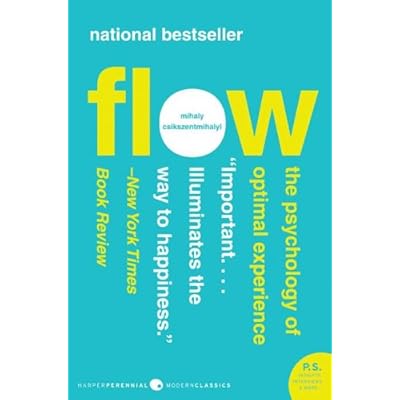
Groundbreaking research by Hungarian Psychology Professor Mihaly Csiksentmihalyi discovered that people report being most happy when they are engaged in an activity where their body or mind is stretched to its limits in a voluntary effort to accomplish something difficult and worthwhile. For many people, this happens most often at work. Csiksentmihalyi calls this experience “Flow” and explores it in detail in his book Flow, The Psychology of Optimal Experience.

Flow can be experienced in many activities; work, sports, music, art, cooking. Csiksentmihalyi found that every flow experience “provided a sense of discovery, a creative feeling of transporting a person into a new reality. It pushed the person to higher levels of performance and led to previously undreamed-of states of consciousness. In short, it transformed the self by making it more complex.”

Two things that can prevent flow are boredom and anxiety. It your activity is too easy, it won’t keep you engaged and happy.  If your activity is too difficult, anxiety will keep you from becoming engaged and happy. The key is to find an interesting activity that is moderately difficult and continue to increase the difficulty as your skills develop.

When you reach a state of flow, all other concerns melt away along with any sense of the passage of time. It really is the journey, not the destination that matters.

When are you happiest?


Thursday, December 15, 2011

An Arrogant Assumption

Image by mre770 via Flickr
This blog and others like it are built on an arrogant assumption. By providing motivational tidbits and prescriptions for creativity, these blogs convey the impression that if you are smart enough, work hard enough, and follow these instructions, all will be well with your life.

But the world doesn’t always work that way.  I have friends and colleagues that I respect deeply who have been unable to find work for months. There are many people who are driving innovation and evolving new business models in their companies, but the new business isn’t growing fast enough to offset the declines in their traditional lines. Many artists and craftsmen find it difficult to market their products or skills when potential customers are worried about political deadlock in the U.S. congress or the debt crisis in Europe. Injury and illness can stop anyone.

The bottom line is we live in a complex and difficult world. I refuse to believe that people who are struggling are doing so simply because they didn’t work smart enough or hard enough. No amount of education or activity can eliminate disappointment and loss. The quality of our lives is based on how we react to our successes and our losses.

I believe the recommendations in The Creativity Paradox have value. Striving to expand your creativity will not guarantee that all will be well, but it will make every day a little better. There is joy in the effort and experience of creation regardless of the results.


Thursday, December 8, 2011

Choose the Difficult Assignment

Image of Hamilton Mountain Trail by Major Clanger

Every now and then, each of us comes to a crossroads in our career where we have to choose between two different projects. Usually, one of the assignments appears to be more challenging than the other. 
 

There are several advantages to choosing difficult assignments. First and foremost, you will learn more. Solving big challenges requires more research, deeper analysis and greater powers of intuition. As you engage these skills, you hone them to a finer edge and they will serve you well in this project and on subsequent projects.

The difficult project is usually the most fun. You will meet a greater diversity of people and may get to travel to some new parts of the world. Encouraging innovation and risk taking in your team is essential to solving tricky problems and people are interesting and entertaining when they unleash their creativity.

Your success at completing the difficult project will be valued more than completing an easy task. You will find that you are offered more opportunities to select projects that are difficult, educational and fun.

What choices are you facing in your career?  Are you bold enough to choose the greater challenge?


Thursday, December 1, 2011

Hartsburg, St. Augustine and Daytona in 3D

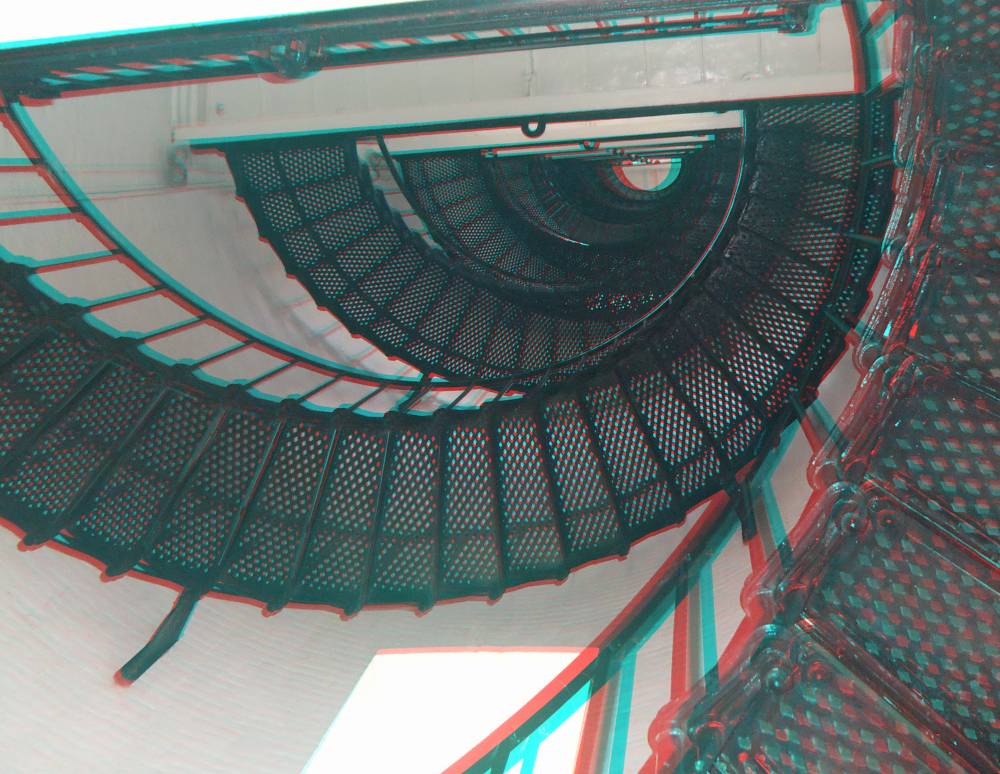
It has been a number of weeks since I posted any stereoscopic images so it seemed like a good topic for the week.  Here are a few images captured over the last few weeks in Missouri and Florida. As usual, I have uploaded each image as a stereo pair and a red/cyan anaglyph so you can chose your favorite viewing method.

First two images are from Missouri.  The pumpkins were on display at the Hartsburg Pumpkin Festival and the barn is in a field near Hartsburg.


The next few images were taken in St. Augustine Florida. I particularly like the receding depth of the circular lighthouse staircase.


These last two images were captured in Daytona Beach, Florida.  It is interesting how the water in the fountain appears to float in the air.


Have you experimented with 3D photography? 

What is your favorite method of viewing 3D images?


Thursday, November 24, 2011

Making Memories Matters!

Today is Thanksgiving and I feel many reasons to be thankful. Most of all, I am thankful for my family, my friends and the opportunity to continue to explore new ideas.

In the last year, I have had the opportunity to work with printers, photographers, labs and other imaging professionals throughout the United States and around the world. It has been a particularly difficult year in many of these communities. In addition to the ongoing economic challenges, it seems like floods, fires, tornadoes, hurricanes and earthquakes have been in the news more than ever before.

One of those tornadoes hit within a block of the Convertible Solutions and Inter-State Studio headquarters in Sedalia, Missouri. The power of nature is frightening, awe-inspiring and humbling. It is a power that shakes us to our core and focuses our attention on things that really mater; our families and our memories of time spent with our families. Making memories matters!

If making memories matters, so does preserving them.  Those of us who work in the imaging field have the honor and a sacred responsibility to make sure that every photo taken, every picture printed and every photo book published is treated as a work of fine art.

What are you thankful for today?


Image above ©Copyright nick macneill and licensed for reuse under this Creative Commons License.


Thursday, November 17, 2011

Creativity Meritocracy

We live in an age that is a creativity meritocracy.  If you have an innovative idea or a creative skill, it is easier than it ever has been to implement your idea and distribute the results through the web.

If you have a software concept that will enhance the way people spend their time, you can build on the communications infrastructure that is already in place, rely on the computer hardware that people are already carrying in their pockets and use an app store for distribution. A single individual can realistically compete with the development teams of large companies.

If you have a passion that you enjoy writing about, you can set up an attractive blog page in a few minutes and share your thoughts with the world. If your content is good, and you put some effort into letting people know it is there, you can build up a following of devoted readers.

If you write a great book, record a great song or film a great video, you no longer have to submit it the publishing companies and hope for the best. You can publish it yourself on Lulu, Blurb, iTunes or YouTube. If the work is good, it can develop a loyal following.

It is no longer possible for the editors and publishers and other gatekeepers to hold you back.

However, every other creator has the same opportunity. So your work needs to be very good to stand out.

What is your creative passion?


Photo at top by Hiro008 on Flickr