Question: What is the best camera for taking a picture?
Answer: The one you have with you!
Since most of us carry our cellphone with us all the time, cellphone cameras have been quickly overtaking other imaging devices. Infotrends reports that 42% of people with a camera phone use it as their primary camera.
Although the resolution of camera phones has been steadily increasing, they have remained limited in their ability to capture pictures in low light situations or zoom in well on distant subjects. These capabilities required large lenses which don't fit into a camera phone. This is about to change.
Mountain View, California based Pelican Imaging Corporation has built a prototype of an array of 25 cameras that can easily fit into a smartphone. With 25 imaging sensors, far more light can be captured, greatly improving the performance in low light conditions. The data from all the individual sensors can be combined to compute an image far sharper and with a greater dynamic range than any single sensor could produce.
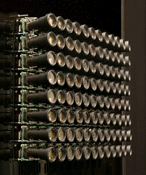 |
| A large array of cameras for research at Stanford University |
Since the images are being captured from different angles, it would also be easy to compute a pair of stereo 3D images or a set of multiple views for lenticular 3D prints.
The limitations of the current camera phones are part of the reason why serious photography enthusiasts still buy digital single lens reflex cameras, micro four thirds systems and other high end image capture tools. These limitations also help preserve the market for professional photography by preventing the average camera phone user from capturing a great image.
The reduction of quality differences between consumer cameras and professional cameras have been already changed the professional photography market significantly. The introduction of array cameras on cellphones will accelerate that trend.
What is your favorite image capture device?


